
A reefer container does not become simple just because it clears the port.
Someone still has to pull the box. The driver needs instructions that match the terminal release, not yesterday’s plan. And the warehouse has to know what is coming in, how cold it needs to stay, and whether the freight is sitting for distribution or moving again quickly.
That is the question facing Houston temperature-controlled imports. Port capacity isn’t the issue; Houston already has scale. The question is whether freight can move from terminal release to controlled storage to outbound transportation without breaking down in between.
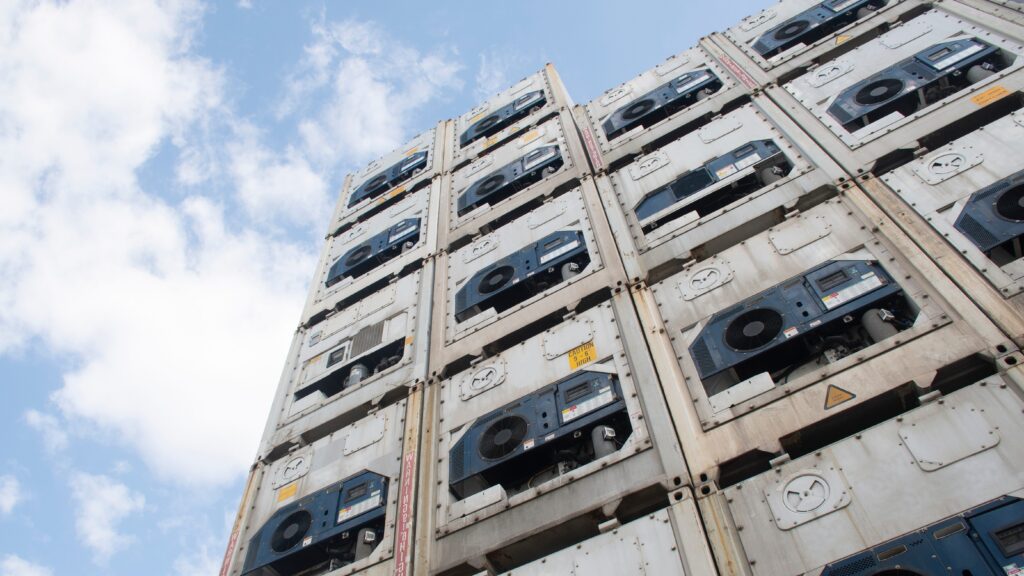
Port Houston’s latest monthly trade report showed loaded container activity up year to date, with loaded imports helping drive the increase. That gives food, beverage, confectionery, and life sciences shippers a reason to look at Houston with more interest, especially when cargo is headed into Texas, the South Central region, or nearby distribution markets.
ECW now has a direct operating footprint there. East Coast Warehouse & Distribution’s Baytown operation is positioned near Barbour’s Cut and Bayport, with warehousing and trailer/container capacity built around port-adjacent freight. For shippers, the point is plain enough: product can come off the port and reach a controlled operating base before the day starts stretching.
Houston Adds Another Gulf Coast Door
Import teams do not change port habits casually. A lane usually comes with habits that have built up over time. The customers are familiar. The carriers are familiar. The working routine is, too.
Houston tends to come into view when that routine stops feeling reliable.
Maybe the freight is headed closer to Texas than to an East Coast distribution point. Maybe seasonal volume needs more room. Maybe the usual corridor still works, but every peak season feels tighter than it should. None of that automatically makes Houston the right answer. It does make the comparison worth doing.
The port side is only one piece of that comparison. A routing team still has to ask what happens next. Where does the box go after release? How long can it sit? Which team owns the first update if the pickup window moves?
Those questions sound basic. They are also the questions that decide whether a Gulf Coast entry point feels organized or irritating by noon.
Reefer Space Changes the Stakes
Dry freight gives teams more room to recover from a clumsy day. Not unlimited room, obviously. But a slow appointment or a late handoff usually stays an operations problem.
With temperature-sensitive freight, a delay can stop being only a timing issue and start affecting the product itself.
A confectionery shipment in warm weather has a different tolerance for waiting. So does a beverage load tied to a retail window. Life sciences freight brings its own rules around handling, access, and documentation. The more sensitive the product, the less forgiving the first move becomes.
That is why the Bayport update belongs in this discussion. In FreightWaves coverage of Port Houston’s container activity, Port Houston commissioners approved more design work for refrigerated-container infrastructure at the future Bayport Container Yard 9. The plan calls for capacity of more than 1,800 refrigerated containers once the yard is built out and equipped.
A reefer yard does not solve receiving, storage, or delivery by itself. It does show that refrigerated cargo is part of Houston’s next phase at the terminal level.
The remaining work sits just outside the gate. The box still needs a truck. The product still needs the right building. The next leg still needs to be ready before the freight becomes somebody’s urgent phone call.
Baytown Shortens the First Inland Leg
Teams often treat the first inland move as routine because it is short. That can be a trap.
Short still needs coordination. A box can be available before the driver is, or arrive while another load ties up the dock. Then the trailer needs a place to wait. That is how a short drayage move turns into a day of chasing updates.
Baytown helps because it keeps that first leg close to the terminal. Freight can move from the port into a controlled facility before anyone pushes it far inland, giving the team a chance to stabilize the next step.
That matters in a very practical way. A container has somewhere to go. A trailer has somewhere to wait. The receiving team can prepare before the product is at the door, which sounds ordinary until you have watched the opposite happen.
For Houston temperature-controlled imports, the first controlled stop is not a nice extra. It is part of protecting the shipment while the rest of the day keeps moving.
Storage Depends on What Happens Next
Cold storage is not one fixed need.
Some freight sits in controlled storage before distribution, some moves out quickly. Other loads pause on the warehouse floor because a label is wrong, a co-pack is still open, or several orders have to be built into one outbound move.
Timing may drive a beverage load going into retail. Confectionery often brings more seasonality and can react faster to temperature swings.
Food ingredients may need clean lot handling. Life sciences freight may need tighter access rules and cleaner documentation at each step.
ECW’s Warehouse Solutions give shippers several ways to handle product once it reaches the facility, including temperature-controlled storage, ambient space, cross-docking, co-packing, labeling, and multi-vendor consolidation.
The right warehouse setup depends on what has to happen to the freight next. In some cases the team is holding it. In others the team is preparing it, combining it with other product, or turning it back out for the next move.
Near the port, the team is not making that call from far away. The box is already close, the dock can see what arrived, and the next move can change before the whole day gets locked in.
The Port Choice Has to Fit the Customer Route
Houston can take pressure off one lane and still create new coordination work if too many hands split the setup.
If the customer sits in Texas or a nearby market, the truck is not starting from a farther-east gateway. That can change the inland leg after discharge. In peak season, it may also keep some boxes out of an overloaded lane instead of asking one preferred gateway to carry the whole season.
That can help, but only if the work after release stays connected.
Fragmented moves are the danger. One provider handles drayage. Another handles storage. A third handles outbound freight. Then a receiving window shifts, and the shipper is stuck translating updates between people who are all technically doing their piece.
ECW’s Transportation Solutions connect port drayage, full truckload, less-than-truckload, and temperature-controlled moves. For a Houston import flow, that connection helps keep terminal release tied to the next leg instead of turning the shipment into a string of separate calls.
The gateway can change. The operating habits should not have to change every time with it.
Decide the First Move Before Release
Houston temperature-controlled imports work best when the team settles the key choices before the terminal makes the container available. The team should already know who is picking the box up first. They should know where it is going, what temperature to maintain on arrival, and what the fallback plan is if the receiving window shifts.
None of this is complicated. It is just the difference between a planned import move and a recovery effort.
Baytown has a specific job here: keep sensitive freight close after release, inside a nearby facility, while the team lines up the outbound move.
Houston is not the answer for every lane. No port is. But for the right freight and the right market, it gives shippers another Gulf Coast entry point with controlled storage and transportation close enough to make the first move less fragile.