
Online beverage sales may grow through digital channels, but the product still enters the supply chain as physical freight. It has to be received, staged, protected, and released in an order the warehouse can actually run.
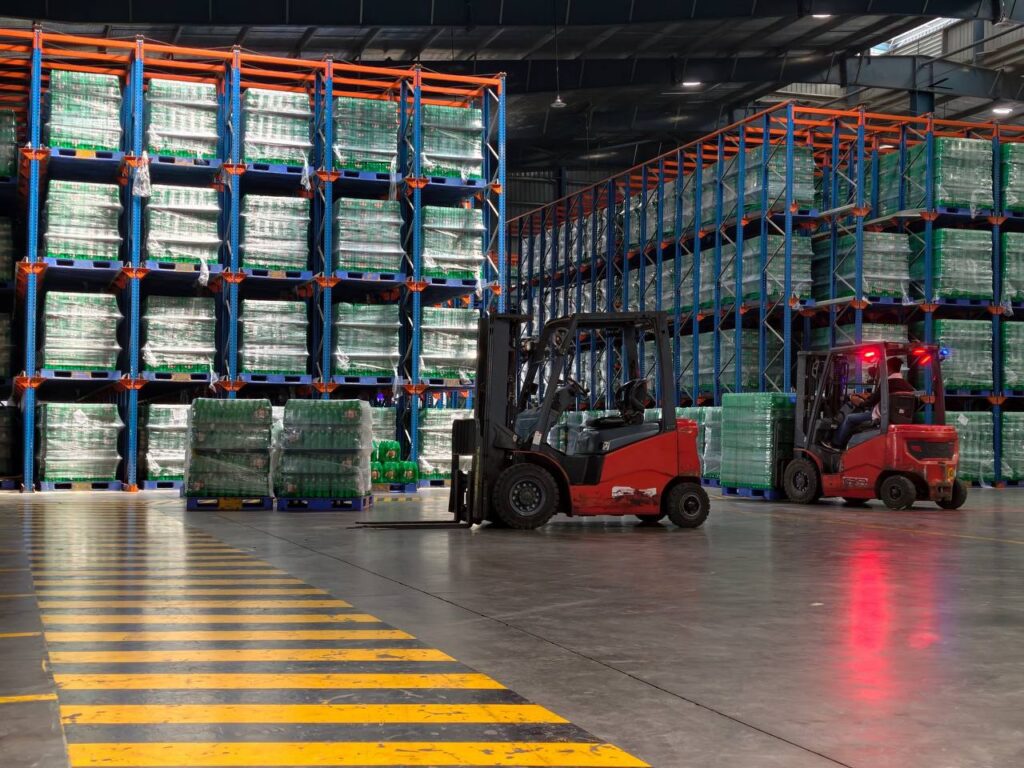
Forecasts can separate online demand from retail replenishment. Imported inventory is not that obedient. It often lands in bulk, while each channel needs different timing once the product becomes available.
FMI and NIQ project online grocery sales to grow at an 11.6% annual rate through 2028, with ecommerce already accounting for about one-fifth of total grocery spending. For importers, that growth puts more weight on the first warehouse decision near the port. The earlier teams decide what should leave right away and what should wait, the fewer corrections they have to make farther inland.
A port-adjacent warehouse gives beverage teams room to make those calls near the entry point. If priorities change after inventory has already moved deeper into the network, the fix usually means extra handling, slower response, or both.
The Sales Channel Changed Before the Warehouse Model Did
For years, beverage distribution was easier to plan around larger moves. Import, store, release, replenish. The rhythm was not simple, but it was familiar enough to build around.
Online demand complicates that rhythm because it changes how inventory gets claimed. A case that once moved through a predictable retail replenishment path may now be pulled toward a marketplace order, a direct-to-consumer promotion, a club account, or a faster grocery delivery model. The product itself has not changed. The claims on it have.
That is where imported beverage inventory can become harder to manage. The warehouse receives product before every downstream order is fully settled. Sales teams may still be adjusting promotions. Retail accounts may revise replenishment timing. Ecommerce teams may be watching demand move by the day.
Sometimes by the hour.
The wider grocery market points in the same direction. McKinsey’s 2026 grocery report notes that shoppers now place real value on speed, with online grocery delivery expectations ranging from one-hour delivery to same-day service. Beverage brands do not need to chase every fast-delivery promise directly to feel the effect. Retailers and marketplaces absorb that pressure first, then pass it upstream through tighter replenishment rules.
The First Domestic Handoff Has Become a Planning Point
After port pickup, imported beverages need more than a quick move out of the terminal. They need a first warehouse move that keeps the brand’s options open without slowing the whole operation down.
That handoff can fall apart in small ways.
A container appointment may look like transportation work on paper. In the building, it becomes labor timing, dock space, inventory status, and the first realistic outbound plan. This is why drayage and warehousing need to be managed as one operating flow. When they are planned apart, product can arrive before the warehouse has a clear answer for where it should go next.
Beverage freight leaves little room for vague instructions. A fast-moving SKU tied to a retail account should not sit behind slower stock just because both arrived on the same load. Temperature-sensitive product needs the right zone before anyone starts talking about release. Promotional inventory can be more awkward still: visible in the system, physically on site, but waiting on a channel decision from the brand.
And that waiting has a cost. Not always a huge one at first, which is why it can slip by. But a late call near receiving can turn into extra handling later, or into “available” inventory that cannot move when the customer-facing team expects it to.
Smaller Orders Change the Release Rules
Online beverage demand is not a clean swap from one channel to another. It bends the release model.
A warehouse planned around pallet movement can still do the work, but the old rhythm starts to lose precision. More product needs a decision before it leaves the building. Not a big strategic meeting. A practical warehouse decision: hold this, release that, keep this SKU available because demand is still moving.
The Problem Is Not Always Volume
A brand may handle the same total inventory and still feel more pressure inside the warehouse. Smaller order profiles create more touches. Retail replenishment may still need pallet discipline, while ecommerce demand pulls inventory in thinner slices. Grocery and marketplace channels can tighten the clock even more.
That pressure reaches the warehouse as release timing.
Where the Work Gets More Specific
For imported beverages, receiving is no longer only the point where stock enters the building. It becomes the place where channel logic starts to show.
A product tied to retail replenishment may need a clean outbound path. A limited-run flavor may need a little more control until the promotion calendar is confirmed. Temperature-sensitive freight cannot drift through the building while the team waits for instructions. Even shelf-stable stock can become a problem if it is placed in a way that makes the next release harder than it needs to be.
This is where vague inventory status becomes dangerous. “Available” is too broad when several channels are pulling from the same pool.
A useful plan does not need to be overbuilt. It does need a few decisions made early: what can move as soon as it is received, what should stay close for changing demand, who can approve a priority change, and how quickly updated instructions reach the warehouse floor.
The point is not to turn every inbound load into a special project. It is to stop treating every load as if the next move is obvious.
Cross-Docking Has a Different Job in Beverage Ecommerce
For beverage importers, cross-docking is often treated as a speed tool. That is still true. But online demand gives it a slightly different role.
It becomes a way to protect movement for inventory that already has a clear next step.
When Speed Is Actually Useful
Cross-docking works best when the warehouse is not being asked to guess. The product is received, checked, and moved toward outbound transportation because the destination is already known. A retailer may be waiting on replenishment. A fast-moving SKU may need to reach a regional node. A promotion may already have dates attached, and the product should not lose time sitting in storage.
In those cases, storage can become drag. The warehouse does not need to admire the inventory. It needs to move it.
For beverage brands, that can be especially useful when online and retail demand are moving at different speeds. Cross-docking lets teams separate product that is ready for release from inventory that still needs a holding decision.
When Cross-Docking Becomes the Wrong Shortcut
There is also a line. A product should not be pushed through a cross-dock path just because everyone is tired of looking at it.
If the channel priority is unclear, cross-docking can send freight in the wrong direction faster. If documentation is incomplete, speed only moves the problem downstream. If temperature requirements need more care, the warehouse should not force a quick transfer that creates risk later.
A simple working rule helps:
Cross-dock the freight with a confirmed next move. Hold the freight that still needs a decision.
That sounds obvious, but it is often where the operation starts to wobble during channel shifts. Ecommerce teams want availability. Retail teams want replenishment protected. Warehouse teams need instructions that do not change after the pallet has already crossed the dock.
The Value Is in the Split
The useful part of cross-docking is not speed by itself. It is the split between inventory that can move now and inventory that should stay under control.
That split gives beverage brands a cleaner release model. The warehouse can keep high-confidence product moving without treating every inbound container as urgent. It can also protect the product that needs more time, better placement, or a channel decision that has not landed yet.
Storage Space Alone Does Not Solve the Channel Split
Extra space helps when inbound volume rises. No argument there.
The trouble starts when space is treated as the whole answer. Beverage inventory can sit in the right building and still be wrong for the moment if the warehouse does not know which channel should get access first. A pallet may be physically available, but tied to a promotion that has not opened yet. Another SKU may be needed for retail replenishment by Friday, while online demand is already eating into the same stock.
That is not a square-footage problem. It is an inventory control problem.
“Available” Can Be Too Loose
Warehouse teams need tighter language than “available” when beverage demand is moving through several channels at once. Available for retail replenishment? Ecommerce allocation? Transfer to another node? Release after relabeling?
The answer changes how the product should be handled.
ECW’s article on warehouse resilience during peak season makes a useful point here: warehouse performance depends on practical visibility and fast decisions before volume starts crowding the operation. For beverage importers, that visibility has to cover more than inventory count. It has to show what the inventory is allowed to do next.
A warehouse can count cases perfectly and still struggle if the release rules are vague. The system says the product is there. The operation still has to know if it can move.
Beverage Handling Adds Another Layer
Shelf-stable drinks still need disciplined rotation and clean handling. Temperature-controlled products narrow the margin further. The building has to protect the product while keeping it reachable for the right channel at the right time.
That is why beverage distribution needs a partner that understands the product category, not only the pallet count. ECW’s soft drinks and water logistics capabilities speak directly to that need, from WMS functionality and inventory rotation rules to labeling, co-pack support, EDI, barcoding, and RF/RFID processes.
The useful warehouse is not the one that simply takes the freight in. It is the one that helps the brand avoid making the same decision twice: once in a spreadsheet, then again on the warehouse floor after the first plan proves too thin.
Port-Adjacent Distribution Keeps More Decisions Within Reach
A warehouse near the port is useful only if it gives the brand more control. Proximity by itself is just geography.
The real value is in what the team can still do while the freight is close to its entry point. Imported beverage inventory may need to wait for a channel decision. It may need to move quickly into replenishment. It may need temperature-controlled outbound transportation or retail-specific handling rules. When those decisions happen early, the brand has more room to adjust without dragging freight through extra transfers later.
A Place To Slow the Right Freight Down
Not every product should move as fast as possible. That sounds strange in a logistics article, but it is true.
Fast movement is useful when the next step is confirmed. When demand is still shifting, a rushed release can make the network less flexible. The product leaves the building, then the brand learns that another channel needed it more. Now the correction sits somewhere between annoying and expensive.
A port-side warehouse should help separate urgent movement from useful restraint. Fast inventory gets a clean path out. Uncertain inventory gets a controlled place to sit until the decision is worth making.
A Place To Connect the Work
This is where ECW’s warehouse solutions become part of the channel strategy, not just the storage plan. Beverage distribution does not split into “storage” and “transportation” once orders start moving through several channels. The warehouse decision affects the outbound plan. The outbound plan affects what should be picked. The channel priority affects both.
A good operating model keeps those pieces close enough to see each other.
That may mean cross-docking high-confidence freight. It may mean holding product in a temperature-controlled zone before the brand commits it to a channel. It may mean using LTL or FTL depending on the release pattern, not just the size of the shipment. In some cases, the most useful move is not a move at all. It is waiting one more beat because the next instruction will change the cost of every step after it.
The Best Node Prevents Rework
Rework is where margins leak. A product gets moved, then moved again. A SKU is staged for one channel, then pulled back for another. A carrier appointment is booked before the warehouse has clean release instructions.
Nobody did anything wildly wrong. The plan just asked the operation to guess too early.
Port-adjacent distribution helps reduce that guessing. It keeps inventory close enough to the port for fast movement, but controlled enough for better allocation. For brands selling across retail and ecommerce, that balance matters more than another promise about speed.
What Beverage Brands Should Check Before the Next Demand Spike
By the time a demand spike reaches the warehouse, the rules should already be clear. Otherwise, the dock becomes the place where channel conflicts get solved late.
Before the next wave, beverage brands should pressure-test a few basic points:
- Can the warehouse see which inventory is ready to move and which product should stay protected for another channel?
- Are ecommerce and retail replenishment pulling from the same stock with clear priority rules?
- Is cross-docking used only when the next move is confirmed?
- Do temperature requirements shape slotting before the product is placed?
- Are warehouse and transportation teams working from the same release instructions?
The point is not to overbuild the process.It is to remove ambiguity from the moments where ambiguity gets expensive.
Faster delivery expectations are not staying at the customer-facing edge of the business either. Axios reported that faster delivery is changing shopping behavior, with Walmart saying its 30-minute delivery option reaches 60% of U.S. households. Beverage importers do not need to copy that model. Still, the pressure travels upstream through retailers, marketplaces, and replenishment windows.
A useful test is to follow one inbound load from port pickup to final release. If the instructions change by department, the operating model needs work before the next spike arrives.
Bring the First Handoff Under One Plan
Online beverage demand keeps testing distribution models built around larger, steadier release patterns. For importers, the first useful fix is often closer to the port, where product can still be received with care and assigned to the right next move.
That may mean a fast release, a controlled hold or cross-docking only when the outbound path is already confirmed.
East Coast Warehouse helps beverage brands bring those decisions into one operating flow across port pickup, storage, cross-docking, inventory visibility, and outbound transportation. If online growth is changing how your beverage inventory needs to move, our team can help review the distribution model before small channel shifts turn into dock pressure, rework, and missed release windows.