
Tight timelines don’t leave much room for improvisation. When freight has to move on schedule, a lot of “service failures” start the same way: the shipment is ready, the team is ready, but the equipment access isn’t.
Asset ownership, or reliable control through dedicated equipment and trailer pools—reduces the slow parts that don’t show up in the plan: waiting for a trailer, hunting for a chassis, burning dock time, and rebuilding schedules after a missed cutoff.
This article breaks down where asset control saves the most time, where it can create new constraints, and how to choose the right level of ownership (or controlled access) for your lanes and service commitments.
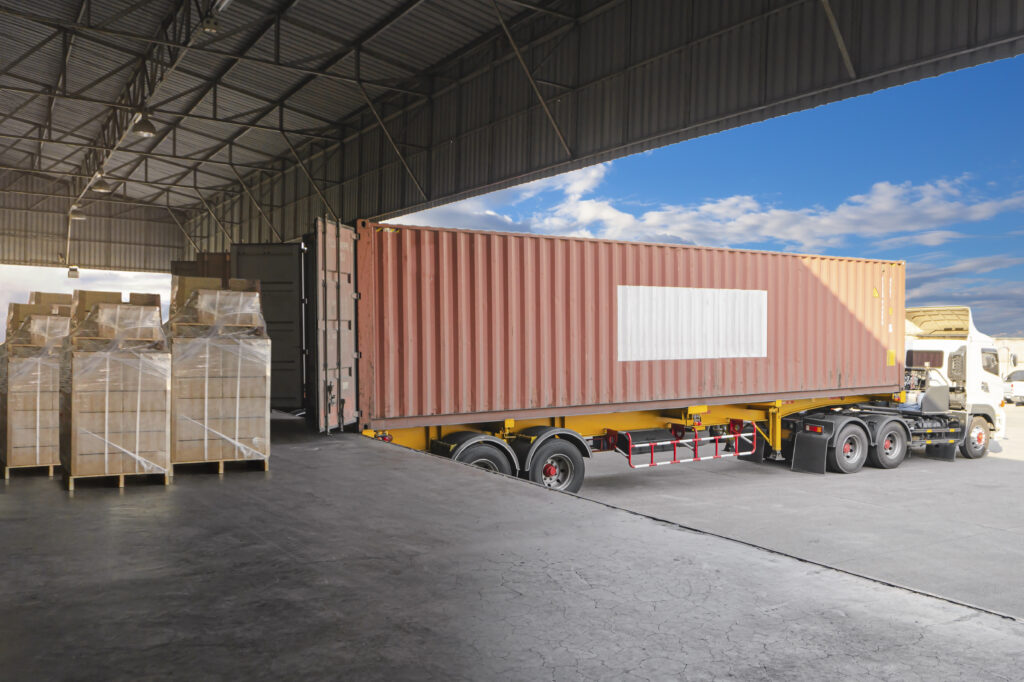
When The Clock Is Tight, Capacity Becomes An Equipment Question
Timelines rarely break because nobody can move freight. They break because equipment and time stop lining up.
A load can be released and ready to roll, and the plan can still stall if the trailer is in the wrong place, the chassis is unavailable, or the dock cannot load inside the window everyone assumed would be there. In Extensiv’s 2025 State of the Third Party Logistics Industry Report, 53% of 3PLs say customers expect delivery in under two days. When the window is that tight, the “in between” time becomes the real risk.
This is why asset control changes performance on tight timelines. It removes common time leaks like:
• waiting for equipment to arrive or be reassigned
• losing hours at the dock because loading time consumes driver time
• missing a cutoff and having to rebuild the day around a recovery move
• port-side constraints that delay the first move before inland execution even starts
Next, we’ll define what “asset ownership” actually means in day to day freight movement, and what counts as control even when the assets are leased or pooled.
What Asset Ownership Looks Like In Real Freight Execution
When people hear “asset ownership,” they often picture tractors and drivers. In day to day freight movement, the assets that protect timelines are usually more specific and more tactical.
It can mean owning equipment outright. It can also mean having dedicated access through leases, committed capacity, or trailer pools. The common thread is consistency. You are less exposed to last minute equipment shortages because the assets are already positioned where the work happens.
Here is what “assets” usually means in practice when timelines are tight:
• Trailers, including drop capacity that lets freight load on the shipper’s clock, not the driver’s clock
• Chassis and container access that determines whether port freight can move inland on time
• Yard capacity and positioning, so equipment is staged where it is needed, not searched for
• Dedicated power and drivers, when service requires guaranteed execution windows
This shift toward controlled capacity shows up in how large shippers move freight today. In the NPTC benchmarking data summarized by Penske, private fleets handle more than 70% of outbound shipments and 43% of inbound shipments. That is not about preference, but rather keeping service predictable when the schedule has no slack.
Where Asset Control Buys Back Time
On tight timelines, the delays that hurt most rarely happen while freight is moving. They show up while freight is ready but cannot move, because the right equipment is not available, not positioned, or not aligned with the dock schedule. Asset control buys back time in a few predictable places where waiting tends to hide.
Drop Capacity Protects Dock Windows
Drop capacity works because it separates loading time from driver time. Instead of trying to load inside a narrow pickup window, facilities can preload and stage trailers, then release them when the trailer is ready.
One sign this is becoming a standard operating move is how the market is packaging trailer access.
What it prevents, in practical terms
• A busy dock turning into a missed pickup because loading ran long
• Staffing the door around carrier timing instead of the facility’s real rhythm
• Driver wait becoming a recurring cost and a recurring schedule risk
• Last minute recovery work after a missed cutoff
Drop capacity also pairs naturally with flow through operations. If you want the internal execution refresher, see Cross Docking: The Logistics Shortcut That’ll Save You Time and Money.
Trailer Control Reduces Last Minute Replanning
When shippers have reliable access to trailers, they can position equipment where the work happens ahead of time. That shifts pressure away from reacting to availability and toward executing a plan.
A visible example of this strategy at scale is Amazon Freight’s June 2025 update, which reports more than 70,000 dry van trailers and more than 24,000 intermodal containers in its network. The point is not the size. It’s what controlled equipment access does to the day: fewer decisions get forced at the last minute, and fewer timelines depend on a perfect handoff.
Chassis Access Keeps Port Freight From Stalling
Port freight can be available, released, and still functionally stuck if the equipment needed for the first move is constrained.
The U.S. DOT Bureau of Transportation Statistics notes that on dock rail eliminates the need for drayage trucks to ferry shipping containers to and from terminals and intermodal transfer facilities, which reduces congestion and improves efficiency. It also explains that an on dock rail transfer facility lets terminal workers load containers onto rail cars within the terminal, avoiding the need to transport containers through terminal gates on chassis.
When equipment tightens, the impact shows up fast in dwell and appointment timing. Maersk’s February 2026 North America update notes that equipment shortages can reduce rail velocity, increase container dwell, and push out truck appointments.
And when operations are tuned, the time savings are tangible. Georgia Ports Authority reports that in 2025, at the Port of Savannah, single moves averaged 32 minutes and dual moves averaged 50 minutes.
Bottom line: if you are planning around tight delivery windows, equipment access is part of the schedule. Trailers, drop capacity, chassis, and rail handoffs determine how much of the day is spent moving freight versus waiting for the right asset to make movement possible.
When Owning Assets Creates New Problems
Asset ownership can protect timelines, but it also introduces a different set of risks. The most common issue is simple: the asset is available, but it is not in the right place, at the right time, with the right workflow around it.
Ownership tends to pay off when it reduces waiting and prevents missed windows. It starts to hurt when it adds cost and complexity without actually improving execution.
Where ownership can backfire
• Utilization is uneven
Trailers and power might be critical during peak weeks, then sit underused for the rest of the month. If the asset is not moving, it is still costing you.
• Positioning becomes a job
Owning equipment means you have to stage it, rebalance it, and recover it. If you do not manage positioning deliberately, the network ends up with equipment in the wrong places and “shortages” in the places that matter.
• Maintenance and condition become timeline variables
Breakdowns and out of service time hit differently when you are relying on your own assets to protect cutoffs. A small maintenance issue can turn into a missed pickup window.
• Yard and facility constraints show up faster
More trailers and containers require space, control, and clear yard discipline. Without that, you trade dock delays for yard delays.
• Flexibility can shrink in the wrong moments
When conditions shift quickly, asset heavy setups can be slower to reconfigure than managed pools or dedicated programs that are built for rapid redeployment.
The useful takeaway is not “own” or “do not own.” It is that assets only improve timelines when they come with a clean operating plan: where equipment sits, how it cycles, how it is maintained, and how exceptions are handled without breaking the schedule.
So the real decision becomes choosing the right level of control for your lanes, without paying for more ownership than the network can actually use.
Choosing The Right Control Level For Your Network
The goal is not maximum ownership. It is the right amount of control in the parts of the lane where time routinely leaks.
Start by pinpointing where you lose hours today. Be specific. “Transportation” is too broad. Is it dock time, trailer availability, chassis access, appointment reliability, or last minute carrier acceptance?
A Practical Set Of Questions To Decide Fast
Ask these in order:
• Where do we consistently lose time?
Dock loading, yard moves, port pickup, chassis availability, rail appointment timing, or carrier coverage.
• What does a missed cutoff actually cost us?
Split shipments, expedites, overtime, penalties, missed retail windows, or customer churn.
• Is the problem predictable enough to engineer around?
If it repeats on the same lanes and facilities, ownership or dedicated access can help. If it is random, flexible programs tend to perform better.
• Can we keep the asset utilized?
If utilization is uneven, consider dedicated access or pools before buying equipment that sits.
• Do we need control over power, trailers, or both?
Many timeline failures are trailer and staging issues, not driver availability.
Matching The Answer To The Right Approach
If your pain point is dock windows and live loads, start with trailer control, often through pool capacity or dedicated drop programs.
If your pain point is port pickup and first move inland, focus on chassis and container access, plus reliable appointment execution.
If your pain point is carrier acceptance and coverage on specific lanes, dedicated capacity can deliver more consistency than pure spot coverage.
If your pain point moves around and changes week to week, heavy ownership can create as many problems as it solves. In that case, prioritize flexible access models and tighten the operating discipline around positioning and handoffs.
This is also why many shippers land on a blended approach: owned or dedicated assets where the schedule is most fragile, and managed access where conditions shift too often to lock into one setup.
How East Coast Warehouse Helps Protect Tight Timelines
Tight timelines hold up when the operating model removes waiting and keeps exceptions from taking over the day. East Coast Warehouse supports that by pairing port adjacent execution with disciplined handling, so freight moves on schedule even when conditions compress the window.
With ECW’s expertise and infrastructure, importers can:
• Use cross docking when flow through is the fastest and cleanest path to outbound
• Use traditional storage when buffer and control matter more than speed
• Run hybrid operations without letting exception freight disrupt planned throughput
Just as importantly, our team helps align the execution details that decide whether a timeline holds: how freight is staged, how equipment is positioned, how appointments are protected, and how recoveries are handled without turning into a weekly pattern.
If you want to pressure test your current lane design, asset strategy, and handoffs, contact East Coast Warehouse. We will review where time is being lost today and recommend a practical mix of control and execution that keeps freight moving when the clock is tight.